
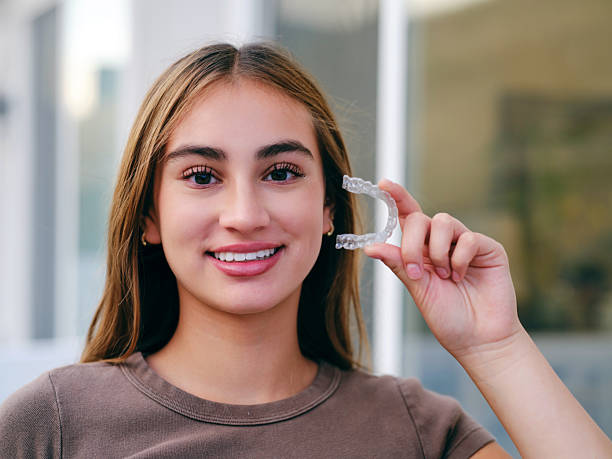
If your Invisalign plan includes removing a small amount of enamel between certain teeth, it’s reasonable to pause and ask why. When teeth are crowded, there may not be quite enough room for them to move into the planned positions. IPR, or interproximal reduction, creates a small amount of space between selected teeth to help make those movements possible.
IPR is a planned part of some Invisalign treatments, not a step everyone needs. It does permanently change the enamel on the treated surfaces, so your dentist should be able to explain which teeth are involved, how much space is needed, and why they recommend it. At Townsend Dental Group, an Invisalign consultation in Townsend, MA is a chance to understand that plan and ask questions before deciding how to proceed.
IPR is the planned removal of a small amount of enamel between selected teeth to create space for orthodontic movement. During Invisalign treatment, your dentist may recommend it when the teeth need a little more room to move into the positions mapped out in your treatment plan. It is a specific adjustment to certain tooth surfaces, rather than a routine step for everyone who wears clear aligners.
Interproximal means “between neighboring teeth.” Reduction refers to carefully removing a small amount of enamel from the surfaces where those teeth meet. You may also hear this called enamel reduction, enamel reshaping, tooth slenderizing, or stripping. Those descriptions refer to the same general idea, but interproximal reduction is the term your dentist may use when discussing the planned procedure. Because enamel does not grow back, it is fair to ask exactly what your treatment plan calls for before IPR is performed.
Clear aligners guide teeth through a series of planned movements, but those movements still depend on the space available in your dental arch. If the teeth collectively need more room than the arch provides, crowded teeth cannot simply shift into a straighter arrangement without creating or redistributing space first. IPR can make a small amount of room at selected points so the planned movements can take place. Your dentist will consider whether that approach fits your teeth and treatment goals; creating space through IPR is one option, not an automatic requirement of Invisalign.
An Invisalign plan identifies where space is needed, which neighboring tooth surfaces may be treated, how much space to create, and when to create it during treatment. You might need IPR at only a few contact points, or you may not need it at all. The amount depends on your individual plan, so there is no single measurement that applies to every patient.
If IPR appears in your plan, ask your dentist to show you which teeth are involved and how the added space helps them move. That conversation can make the recommendation much easier to understand before you decide on treatment.
IPR may be recommended for several reasons, all tied to how your teeth fit together and where they need to move. Your dentist might use it to make room for crowded teeth, account for differences in tooth width, or improve how certain teeth meet after alignment. The reason should be specific to your treatment plan.
Crowding happens when there is not enough space in the dental arch for the teeth to sit in their current positions without overlapping or turning. Invisalign aligners can guide those teeth toward better alignment, but the teeth still need somewhere to move. By reducing a small amount of enamel between selected teeth, IPR creates additional space where the plan calls for it.
How much space is needed depends on the pattern and degree of crowding. IPR may be one part of a plan for mild to moderate crowding, but it is not the right way to address every crowded smile.
Improving Tooth Proportions When Tooth Width Contributes to Crowding
Sometimes the issue is partly a matter of fit: the combined width of the teeth leaves less room for them to align within the available arch space. A dentist may also identify a tooth-size discrepancy, meaning certain teeth differ in size or proportion in a way that affects how the upper and lower teeth fit together.
In a suitable case, carefully planned IPR can adjust the width of selected teeth while creating space for movement. The goal is not to make every tooth narrower. It is to address a specific space or proportion concern identified during treatment planning.
The places where neighboring teeth touch are called contact areas. Their position and shape matter when a dentist plans how teeth will look and fit together after they move. Some teeth are wider at the biting edge and narrower near the gums, giving them a more triangular shape. When these teeth are straightened, a small dark space called a black triangle may be visible near the gumline, even if the teeth touch higher up. Gum shape and support also affect whether that space appears.
For certain tooth shapes, IPR can change the surfaces that meet so the contact area can be positioned differently as the teeth move together. That may help reduce a black triangle in an appropriate case, but it is not a guaranteed fix. Your dentist will need to consider both the shape of the teeth and the health and position of the gums.
For some appropriately selected cases, the relatively small amount of space required can be obtained through IPR rather than extracting a permanent tooth. This can be useful when the treatment plan calls for a modest amount of room spread across particular contacts.
IPR cannot create unlimited space, though. Significant crowding or other concerns with the bite may call for a different approach. If you are weighing treatment options, ask your dentist how much space your teeth need and why they recommend a particular way of creating it.
IPR creates a small amount of space at each selected contact between teeth. There is no single amount that applies to every Invisalign patient. Your dentist plans the amount around the space your teeth need and the enamel that can be safely reduced.
One adjustment between two teeth may seem too small to matter. But when a treatment plan calls for IPR at several selected contacts, those small amounts can add up to space the aligners can use to reposition teeth. Your dentist plans where to create that space so it supports the intended movements; IPR is not simply performed between every tooth to make as much room as possible.
Your dentist considers the enamel available on the selected teeth, their shape and width, the degree of crowding, and the movements planned with your aligners. They also consider how neighboring teeth should meet at the end of treatment. Two people with similar-looking crowding may therefore have different plans: one may benefit from IPR at a few contacts, while another may need space created elsewhere or through a different approach.
Invisalign’s digital planning tools let a provider map out tooth movements and plan where and when IPR may be needed. The timing matters because space must be available for the movements scheduled at that stage of treatment. Your dentist reviews that plan alongside the condition and shape of your teeth, then decides whether the proposed IPR is appropriate. The digital plan helps show the intended sequence; clinical judgment determines what is right for your mouth.
If IPR is part of your Invisalign plan, your dentist will identify the teeth involved, create the planned space, and check the treated surfaces before your aligners continue moving the teeth. It is typically a short part of an appointment, though the timing and number of visits depend on your treatment plan.
Your dentist begins by checking the treatment plan to see which neighboring teeth need additional space and when that space is needed. Only the selected contact points are treated. You can ask to see those areas on your plan so you know what is being recommended before the procedure begins.
Using professional dental instruments, your dentist removes the planned amount of enamel from the surfaces between those teeth. The purpose is to create a measured amount of room for tooth movement. Although the amount is small, the enamel removal is permanent, which is why the location and extent should be determined for your individual case.
After creating the space, your dentist checks the area against the treatment plan and smooths the treated surfaces. This step helps maintain appropriate tooth contours and contact relationships as the teeth move. You may notice a small gap at first; the plan is for the aligners to move the teeth into that space over time.
IPR creates the room; your Invisalign aligners guide the planned tooth movements into it. Depending on the sequence of your treatment, IPR may happen before a particular set of aligners or at a later visit when that space becomes necessary. The procedure and the aligners work together as parts of the same plan for your final alignment.
Enamel itself does not contain nerves, so reducing a small amount of enamel is different from working on the sensitive structures deeper inside a tooth. You may still feel pressure, vibration, or the movement of an instrument between your teeth. People experience those sensations differently, so it would be misleading to promise that IPR feels like nothing at all.
Enamel is the hard outer layer of a tooth. Beneath it is dentin, which can transmit sensation to the nerves inside the tooth. IPR is planned to reduce enamel on selected surfaces between teeth; treating a cavity may involve removing decay that extends into deeper, more sensitive parts of a tooth. That difference helps explain why the two procedures may feel different.
You may notice light pressure between your teeth, vibration, or a scraping sensation as your dentist creates the planned space. You might also feel the instrument near your gums. If anything feels sharp or uncomfortable, tell your dentist right away. They can pause, check the area, and explain what you’re feeling before continuing.
Your teeth may feel a little different where space was created, and you may also notice the usual pressure that comes with moving to a new set of aligners. Persistent or worsening pain is a reason to contact your dental team, as is sensitivity that concerns you or a treated area that feels rough or catches floss. They can check your teeth and gums and tell you whether anything needs attention.
IPR can be a safe part of Invisalign treatment when it is appropriate for the patient and performed conservatively by a dental professional. It still removes enamel permanently. That makes the decision about which teeth to treat and how much to remove important; IPR should never be treated as a routine step for every patient.
Teeth do not all have the same shape or the same amount of enamel between them. Before recommending IPR, your dentist considers the teeth involved, their condition, and how much space the Invisalign plan requires. If a proposed reduction would be unsuitable for a particular tooth, that affects whether IPR belongs in the plan at that contact point.
The aim is to remove only the amount of enamel needed for the planned movement while leaving the remaining tooth structure intact. Your dentist also checks and smooths the treated surfaces after creating space. Careful planning and execution matter because removing too much enamel can increase the risk of problems such as sensitivity or damage to the tooth.
IPR does not automatically cause cavities. Research on professionally performed IPR has not found a clear increase in cavities on treated surfaces, though your own risk depends on more than the procedure alone. Oral hygiene, diet, fluoride exposure, and the health of your enamel all matter. Brushing with fluoride toothpaste, cleaning between your teeth, and keeping regular dental visits remain important during Invisalign treatment and afterward.
No. Removed enamel does not regenerate. That is why IPR needs to be a considered choice, with the reduction limited to what your treatment plan calls for. If you have concerns, ask your dentist which surfaces would be treated, why that space is needed, and whether another way of managing space is suitable for you.
When teeth need more room to align, your dentist may consider more than one way to manage space. IPR and orthodontic expansion address that need differently. The right approach depends on your teeth, bite, and planned movements.
IPR removes a carefully planned amount of enamel where selected teeth meet. Small amounts of space created at those contacts give the aligners room for particular tooth movements. It changes the width of the treated teeth slightly; it does not widen the dental arch.
Expansion aims to create room by changing the width or shape of the arch rather than reducing enamel between teeth. What “expansion” means in a treatment plan depends on the patient’s age and anatomy. With aligners, it often involves planned outward movement of teeth within appropriate limits; widening the underlying jaw is a different process that may require another type of treatment. Your dentist can explain which approach, if any, is suitable for you.
IPR and expansion are not necessarily either-or choices. A plan may use some arch widening along with IPR at selected contacts, then use the aligners to guide the teeth into the space created. Other patients may need only one approach or neither. The goal is to make enough room for the planned alignment while choosing methods appropriate for your teeth and bite.
IPR and tooth extraction both create room for orthodontic movement, but on very different scales. IPR makes relatively small amounts of space between selected teeth. Removing a permanent tooth creates a much larger space and changes how the remaining teeth must be moved. Neither decision is based on crowding alone.
If a treatment plan calls for a modest amount of additional room, your dentist may be able to create it through IPR at selected contact points. The space from several carefully planned reductions can add up, but there are limits to how much enamel can appropriately be removed. IPR should therefore be chosen because it fits the amount and location of space needed, not simply because it sounds less involved than extraction.
When crowding is more substantial, IPR alone may not provide enough room for the planned movements. Your dentist may consider other ways to manage space; in some cases, that discussion can include extracting a permanent tooth. Extraction is not an automatic next step when IPR is unsuitable. The recommendation depends on a full evaluation and the goals of treatment.
Two smiles can look similarly crowded but need different treatment plans. Your dentist also considers how your upper and lower teeth meet, where the teeth sit within the arches, and how moving them may affect your bite and facial profile. These relationships help determine both how much space is needed and where it should come from. If IPR or extraction is proposed, ask how that choice supports the overall result your dentist is planning.
IPR does not always happen when you receive your first set of Invisalign aligners. Your dentist schedules it for the point in treatment when the planned tooth movements need that space. Depending on your plan, that may be early in the process, partway through the aligner sequence, or during a later refinement.
If teeth need additional room before they can move as planned, your dentist may perform IPR before you begin wearing the aligners that call for that movement. This gives the teeth space at the right time rather than waiting until they have nowhere to go. Your treatment plan identifies the contacts involved and the stage when that space is needed.
Some teeth may need to shift first before IPR is appropriate or accessible at a particular contact. In that case, your dentist may schedule the procedure for a later visit. A later IPR appointment does not necessarily mean the original plan has changed; it may simply be the sequence your dentist planned from the start.
Your dentist will check how your teeth respond as treatment progresses. If the remaining movements call for an adjustment, they may plan additional aligners, often called refinements. In some cases, a refinement plan also calls for IPR at selected contacts to create the space those movements need. That recommendation should be explained in the same way as IPR in your original plan: which teeth are involved, how much space is needed, and why.
Some Invisalign plans use more than aligners alone because creating space, guiding individual teeth, and adjusting the bite are different jobs. IPR creates space between selected teeth. Attachments—small shapes bonded to teeth—help the aligners apply force for certain movements. Elastics can add force between the upper and lower arches to help address how the teeth meet. Your dentist may recommend one, two, or all three depending on the movements your plan requires.
For example, IPR may make room for a crowded tooth while an attachment helps the aligner guide that tooth into position. If the bite also needs adjustment, elastics may be part of the same plan. Each has a distinct purpose, and using them together does not mean every Invisalign case needs all three.
No. IPR is recommended when a treatment plan calls for a small amount of space at selected contacts or an adjustment to tooth proportions. Many people complete Invisalign treatment without it.
Yes. IPR permanently removes a controlled amount of enamel from specific surfaces between teeth. Enamel does not grow back, so your dentist should explain why it is recommended and how much reduction is planned for your teeth.
Some people may notice temporary sensitivity or a different feeling between the treated teeth, while others notice very little. Persistent, worsening, or concerning sensitivity should be checked by your dental team.
Yes. IPR intentionally creates a small amount of space between selected teeth, so you may briefly notice a gap. The Invisalign plan is designed for subsequent tooth movements to use that space. If a gap concerns you or does not seem to be changing as expected, bring it up at your next check-in.
Yes. Some teeth can move into the planned positions without additional space. Other treatment plans may use a different way to manage space. Whether IPR is helpful depends on your teeth, bite, and treatment goals—not on the fact that you chose Invisalign.
“Filing teeth” is an informal description, but it leaves out the reason for the procedure and how it is planned. IPR refers specifically to controlled enamel reduction between selected teeth to create space or adjust their contact and proportions during orthodontic treatment.
A tray fitting your teeth now does not mean there is enough room for every movement planned later. Invisalign treatment uses a sequence of aligners, and IPR may be scheduled before the stage when particular teeth need more space. Your dentist can show you where that need appears in your treatment plan.
If IPR is included in your treatment plan, you deserve to understand why. Ask where your teeth need more space, which contacts your dentist recommends treating, and how that space will help your aligners move the teeth. You can also ask whether other ways of managing space are part of the plan and when IPR would take place in your aligner sequence.
At Townsend Dental Group, we want you to feel comfortable asking those questions and making an informed decision about your care. If you’re considering Invisalign in Townsend, MA, schedule a consultation to talk through your goals and see what your Townsend orthodontic treatment plan may involve.
